Why Voice and Speech Based Surveys Are Replacing Traditional IVR
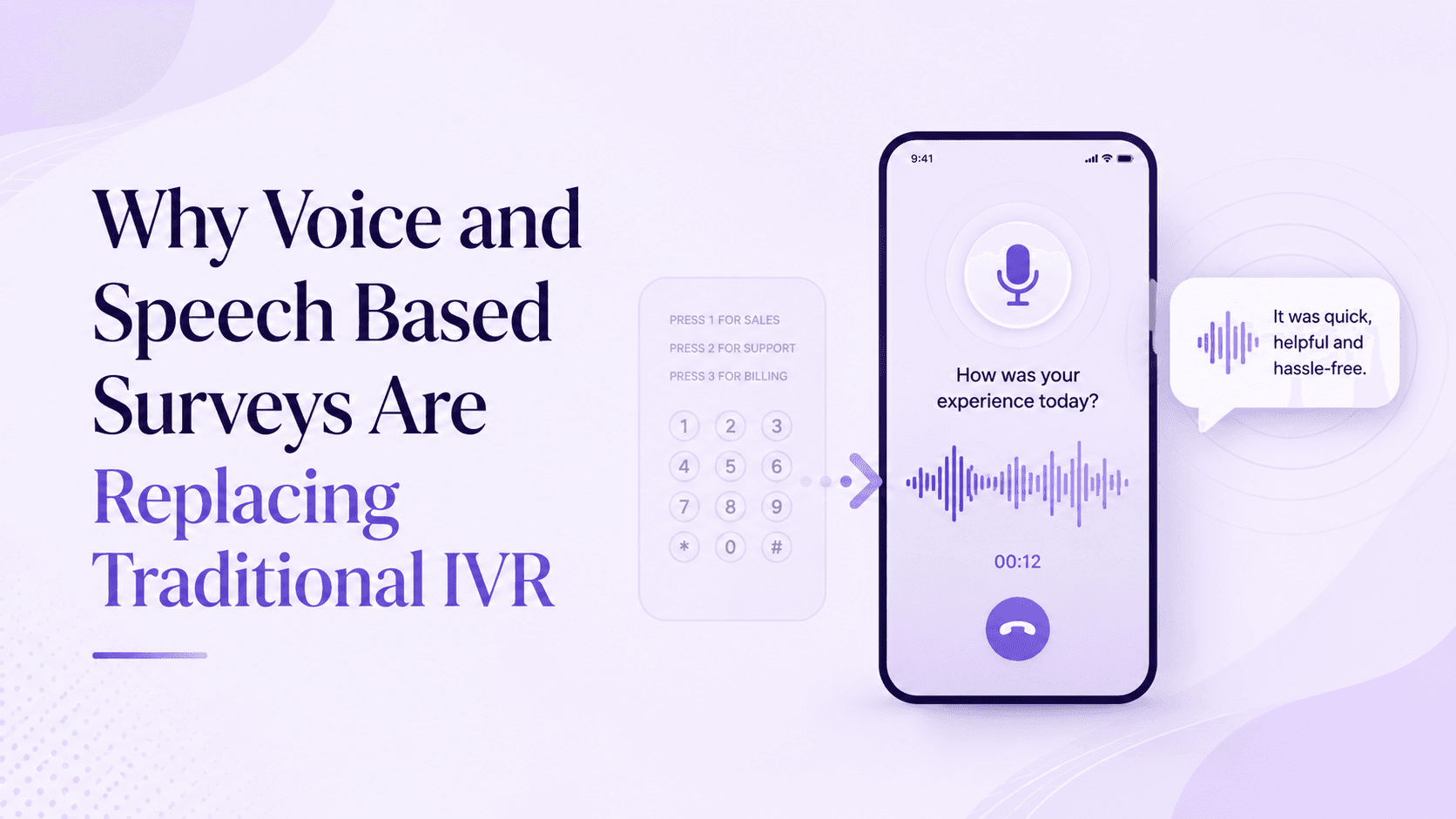
Getting accurate data in Nepal has always been a tough job. You are dealing with rugged terrain like mountains and where the internet is not even accessible, dozens of languages, and varying literacy levels. Until now many organizations have relied on the standard phone based survey as phones are more common to people now.
As per the research and data from trusted sources, smartphones have penetrated Nepali market and are now hitting over 85% across the country, so that’s why reaching out through a mobile device is the fastest way to get answers and conduct the survey.
But due to AI and modern technology, there is a massive shift happening right now in how we collect this accessible data. These old ways of gathering feedback are becoming “outdated”, and this has given more chances to natural voice surveys.
The Problem with Traditional IVR
Let us look at the traditional IVR survey, and how exactly it works. Initially, the automated system calls a participant, and then plays a pre-recorded messages, and asks people to press a specific number on their keypad or screen to send the answer.
For a very long time, this method actually worked. It solved a massive logistical problem for many organizations. It also allowed researchers, NGOs, and businesses to reach remote populations and without even sending interviewers for weeks on bus rides, which was actually a great achievement. It was used everywhere from agriculture tracking, health monitoring to government emergency messages in the time of natural disasters. And now initiatives like the People’s Voice Survey are getting more attention due to more accurate data gathering through sentiment analysis.
But why traditional IVR will not work in the long run. Because it is adapting with technology and it kind of looks outdated for users also.
When you think about the last time you had to navigate an automated keypad system. Listening to a robotic and specific robotic voice and giving different options takes patience and time. For a rural farmer or an elderly citizen, that cognitive load is heavy. If they press the wrong button, and doing this boring stuff makes them hang up.
And that’s exactly why it leads to high drop off rates and skewed/improper data. The worst part is that traditional IVR only gives you multiple choice answers. It completely misses the rich context of exactly how someone feels and why they feel that way with the traditional method.
So why are many Organizations Shifting towards Speech Based Data Collection ?
This eventually evolved the way to conduct phone based research, and that’s the voice based survey.
So to prioritize the customer interaction more, forcing any participant or user to press a button is not a good option and it should not be, so a speech-based survey lets them actually talk and interact more. They listen to a prompted question like a generative engine does and simply answer using their own style of words. The platform then records the response you gave, capturing the actual voice and tone of the user.
This completely changes the method for data collection. Here is what most people do not realize about what is actually changing the feedback method.
- Interaction increases the engagement and people tend to respond and complete the whole conversation and that’s a profitable survey.
- You capture “Rich” quality data instead of hurried and inaccurate responses. A keypad press tells you someone is unhappy but a recorded voice tells you exactly why they are unhappy.
- The language barrier disappears completely. Participants can speak in Nepali language instead of always listening in those previous English based surveys which many people didn’t even understand.
- Accessibility improves for almost all the population. People with low literacy do not need to look at their screens or understand text to provide their feedback.
How TingTing Forms Solved This Issue ?
Here is exactly how TingTing fixed the broken remote survey model.
If you want to run survey campaigns, and want people to actually complete the whole survey, you have to skip the outdated button pushing survey system, and use TingTing Forms, through which you can interact using voice driven, emotion based system, that feel completely natural to the person on the other end of the line who is actually engaging.
We built TingTing Forms to handle the complexities of a modern speech-based survey without the technical headache. You can scale it massively and with the cost effectiveness of an automated system, but you can maintain the human touch of a real conversation. If you are running a nationwide disaster occurrence feedback, or tracking infectious disease survey, or just gathering local customer feedback, you can collect highly accurate mass data from anywhere you need.
So telling everyone to press 1, voice based surveys can be more effective for the long run and doing market research and getting the opinions on the brands or organization or even government. TingTing helps to actually listen to the people, not just talk and that’s boring also.
You can get a free signup at TingTing to take a look at how it actually works with your organization or to be exact the pool of people you are going to do the survey in. So try AI powered voice feedback and also IVR survey with TingTing Forms.